NTO’s Emily Campbell Joins Advocates at OCRA’s 2026 Spring Advocacy Day
March 26, 2026
Some fights happen in research labs. Others happen in the halls of Congress.
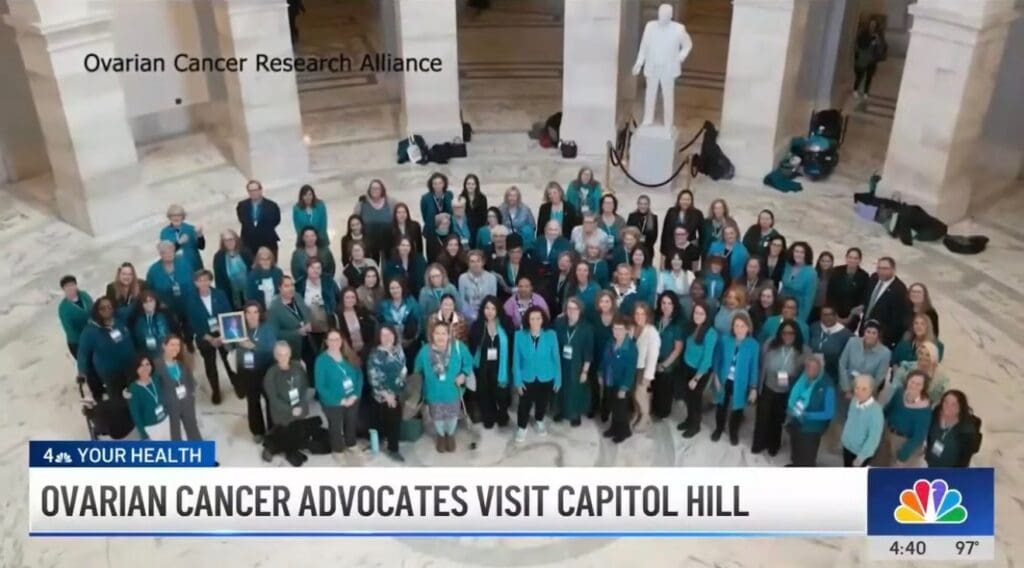
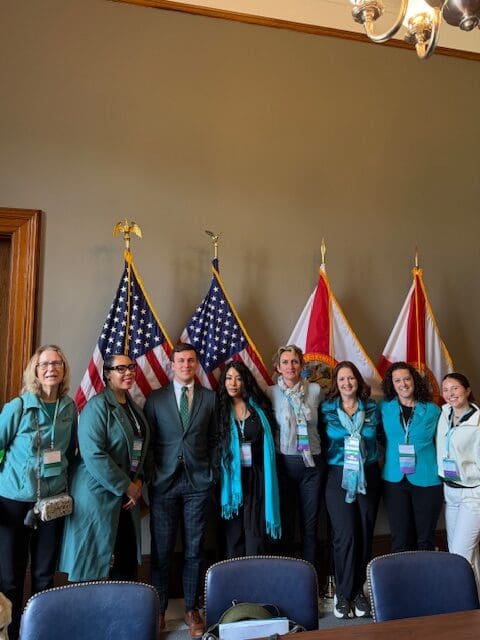
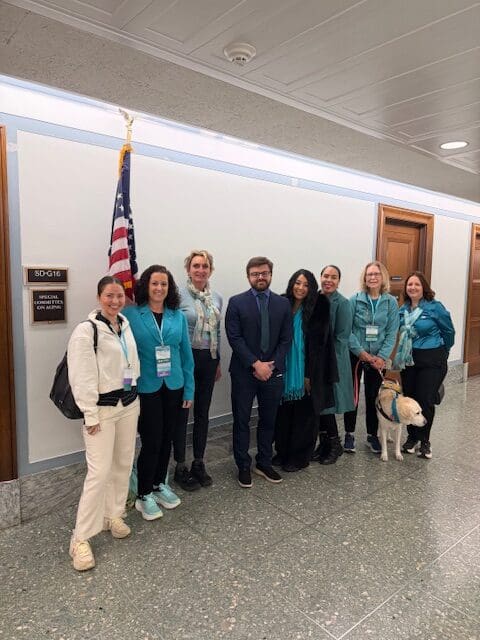
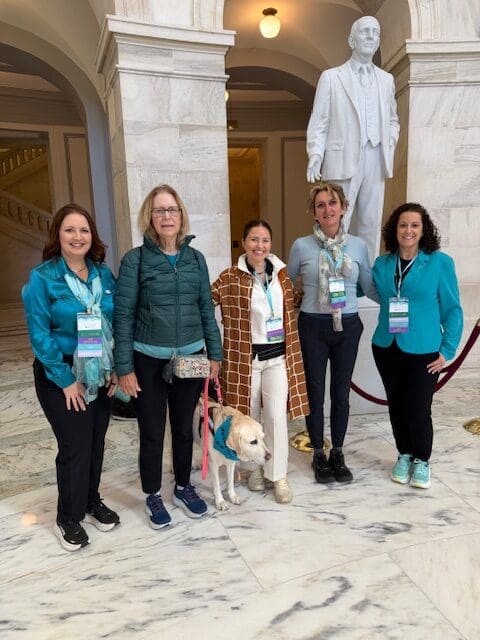 On March 17, Not These Ovaries founder Emily Campbell was in Washington, D.C., standing alongside 123 advocates from across the country for OCRA’s Spring Advocacy Day. They were there to make one thing clear to legislators: the gynecologic cancer community is paying attention, and it’s not going anywhere.
What Was Being Asked, and Why It Matters
The asks were specific. Advocates pushed Congress to commit to FY2027 funding levels that would add $10 million to gynecologic cancer research and education:
- $52.5 million for the Ovarian Cancer Research Program (OCRP) within the Congressionally Directed Medical Research Programs
- $20 million for the Ovarian Cancer Control Initiative at the CDC
- $15 million for Johanna’s Law — formally known as the Gynecologic Cancer Education and Awareness Act — also at the CDC
Advocates also called on members of Congress to sign onto a Dear Colleague letter on OCRP funding, led by Reps. Brian Fitzpatrick, Grace Meng, and Norma Torres in the House, and Sen. Cory Booker in the Senate.
And critically, they urged Congress to support the Gynecologic Cancer STAR Act of 2026, a comprehensive bill that would reauthorize Johanna’s Law, create new survivorship programs for patients, improve access to genetic testing, and boost research across the board.
A Reminder of What Advocacy Can Actually Do
 It’s worth grounding this in recent history. In FY2025, OCRP funding was abruptly cut from $45 million down to $15 million. That’s not a rounding error; that’s a gut punch to ovarian cancer research at a moment when the science is finally starting to move.
Advocates across the country — including Emily — pushed back hard. They showed up in person, took action online, and went on the record. Congress listened. Funding was restored and increased to $50 million for FY2026.
That’s not a small thing. That’s proof that organized, persistent advocacy changes outcomes. For a disease that still lacks a reliable early detection test and has far too few treatment options for rarer subtypes like low-grade serous ovarian cancer and borderline ovarian tumors, federal research dollars are not abstract; they’re lifelines.
The Work Continues
Advocacy Day is one day. The fight is ongoing.
If you believe that women facing an ovarian cancer diagnosis deserve better research, more targeted treatments, and a real voice in the rooms where policy gets made — this is the work. And there’s always a way to be part of it.