
Chemotherapy Drugs for Ovarian Cancer: A Guide for Patients Before Starting Treatment
March 13, 2026
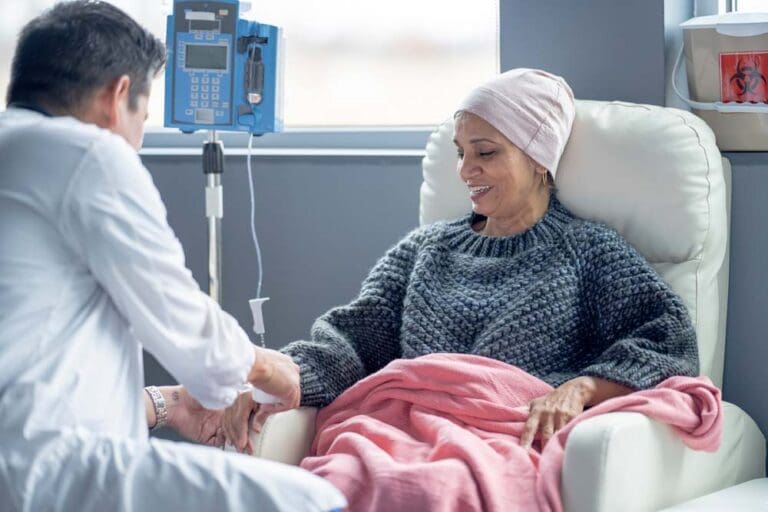
Chemotherapy drugs for ovarian cancer have evolved significantly over the past three decades — and understanding what they are, how they work, and what to expect from them can make a real difference when you’re preparing for treatment.
Whether you’re newly diagnosed with ovarian cancer or you’re heading into a second line of therapy, this guide breaks down the most common ovarian cancer chemotherapy drugs in plain language.
The Standard Starting Point: Carboplatin and Paclitaxel
For most women with ovarian cancer, treatment begins with a two-drug combination: carboplatin and paclitaxel (brand name: Taxol).
This pairing has been the backbone of first-line ovarian cancer treatment for more than 30 years, and for good reason. It replaced an older regimen combining cisplatin and cyclophosphamide, both of which carry more serious risks: cisplatin is significantly harder on the kidneys and nerves, while cyclophosphamide was linked to severe nausea, bladder irritation, and a higher risk of secondary cancers.
Carboplatin and paclitaxel produce comparable or better results with a side effect profile that’s considerably easier to live with than the previous drug combination. These two drugs also work differently from each other, which is part of why they’re used together.
Carboplatin
Carboplatin is a platinum-based drug. This means it contains the metal platinum as part of its molecular structure. It works by damaging the DNA inside cancer cells, essentially preventing them from dividing, causing them to die. It’s given intravenously, typically once every three weeks.
Compared to its predecessor cisplatin, carboplatin causes less nausea, less kidney damage, and less nerve damage. Its main downside is its effect on blood counts, specifically platelets. Thrombocytopenia (low platelet counts) is carboplatin’s primary dose-limiting side effect, which is why blood tests before each cycle are non-negotiable.
Paclitaxel (Taxol)
Paclitaxel belongs to a class of drugs called taxanes, originally derived from the Pacific yew tree. It works by disrupting cell division, freezing cancer cells mid-split so they can’t multiply. It’s also given intravenously, usually before carboplatin in the same session.
The most significant side effect of paclitaxel is peripheral neuropathy: numbness, tingling, or pain in the hands and feet. This tends to be cumulative, meaning it can worsen with each cycle.
One strategy some patients use is cold therapy — wearing frozen gloves and socks during infusion — which may help reduce nerve damage by temporarily restricting blood flow to the extremities. The evidence is encouraging: one trial found that cooling reduced grade 2 or higher neuropathy from 50% to 21%, and compression reduced it from 38% to 24%.
Hair loss is also expected, though regrowth typically begins once treatment ends. Cold therapy plays a role here too: scalp cooling (cryotherapy caps) during infusion has been shown to reduce hair loss for some patients, and is worth asking your care team about before treatment begins.
Together, carboplatin and paclitaxel are given in cycles, most commonly six cycles, each 21 days apart for epithelial ovarian cancer. Your doctor will determine the exact number based on your cancer’s type and stage.
Cisplatin: The Original Platinum Drug
Before carboplatin became standard, cisplatin was the platinum drug of choice. It’s still used today, particularly in intraperitoneal (IP) chemotherapy, where drugs are delivered directly into the abdominal cavity through a catheter rather than a vein.
IP chemotherapy delivers a high concentration of the drug directly to where ovarian cancer typically spreads. Research shows that IP cisplatin improved progression-free and overall survival in optimally debulked Stage III ovarian cancer, but the side effects are significantly more severe, including more abdominal pain, nausea, kidney stress, and neuropathy.
Cisplatin is not used as widely as carboplatin in standard IV chemotherapy today, but it remains part of certain regimens, particularly for germ cell tumors and some combination protocols.
Bevacizumab (Avastin): Adding an Anti-Angiogenic Agent
Bevacizumab (brand name: Avastin) is a different kind of drug. It’s not a traditional chemotherapy agent; it doesn’t directly attack cancer cells.
Instead, it works by blocking a protein called VEGF (vascular endothelial growth factor), which tumors use to grow new blood vessels. Without a blood supply, tumors struggle to grow.
Bevacizumab is FDA-approved for use in ovarian cancer and can be added to standard carboplatin/paclitaxel chemotherapy, then continued as maintenance therapy after chemotherapy ends. It’s given intravenously every three weeks.
Clinical trials showed that bevacizumab extended progression-free survival — meaning it bought more time before the cancer progressed — though it hasn’t been shown to significantly extend overall survival in all patients. The benefit was most pronounced in women with higher-risk disease (suboptimal Stage III and Stage IV).
Side effects specific to bevacizumab include high blood pressure, protein in the urine, wound healing problems, and a small risk of gastrointestinal perforation. Because of the wound-healing concern, bevacizumab is typically not given until several weeks after surgery.
PARP Inhibitors: A New Category of Maintenance Therapy
One of the most significant advances in treatment for high-grade ovarian cancers in recent years is the rise of PARP inhibitors as maintenance therapy after chemotherapy ends. These drugs don’t work the same way as traditional chemo; they exploit a specific weakness in certain cancer cells, particularly those with BRCA mutations or other homologous recombination deficiencies (HRD).
Three PARP inhibitors are currently FDA-approved for ovarian cancer:
- Olaparib (Lynparza): Approved as monotherapy maintenance for BRCA-mutated advanced ovarian cancer after first-line platinum chemotherapy. It is also FDA-approved in combination with bevacizumab for patients with HRD-positive tumors.
- Niraparib (Zejula): Approved regardless of BRCA mutation status for patients who respond to first-line platinum chemotherapy.
- Rucaparib (Rubraca): Approved for certain patients with BRCA-mutated recurrent ovarian cancer.
PARP inhibitors are taken as daily oral tablets: a major quality-of-life advantage compared to IV chemotherapy.
Common side effects include fatigue, nausea, anemia, and in rare cases, myelodysplastic syndrome (MDS) or acute myeloid leukemia (AML). Genetic testing and tumor biomarker testing will help your oncologist determine which PARP inhibitor, if any, is appropriate for you.
Chemotherapy Drugs for Ovarian Cancer Recurrence
When ovarian cancer comes back, the drug choices depend heavily on one critical factor: how long it has been since platinum-based chemotherapy ended.
If the cancer returns six months or more after platinum treatment, it’s considered platinum-sensitive — meaning it’s likely to respond to platinum-based drugs again. In this case, carboplatin may be used again, often combined with one of the following:
- Paclitaxel (Taxol): the same drug used first-line
- Gemcitabine (Gemzar): a different type of drug that interferes with DNA synthesis in cancer cells
- Pegylated liposomal doxorubicin (Doxil/Caelyx): a form of the chemotherapy drug doxorubicin, encapsulated in tiny fat particles (liposomes) to improve delivery and reduce toxicity
If the cancer returns within six months of completing platinum treatment, it’s called platinum-resistant, and different drugs are typically needed. Options include:
- Pegylated liposomal doxorubicin (Doxil) as a single agent
- Topotecan (Hycamtin): a drug that interferes with DNA replication
- Weekly paclitaxel
- Gemcitabine
- Mirvetuximab soravtansine-gynx (Elahere): a newer type of drug approved for patients with folate receptor alpha (FRα)-positive, platinum-resistant ovarian cancer. It works by targeting a specific protein found on certain cancer cells and delivering a toxic agent directly to them, which can help reduce damage to healthy tissue compared to traditional chemotherapy.
Read more: “20 Questions to Ask Your Doctor About Recurrent Ovarian Cancer”
Chemotherapy for Germ Cell and Stromal Tumors
Germ cell and stromal ovarian tumors are rarer than epithelial ovarian cancer, and their chemotherapy regimens differ.
For germ cell tumors, the standard regimen is BEP: bleomycin, etoposide, and cisplatin. Dysgerminomas (a specific type of germ cell tumor) tend to be highly sensitive to chemotherapy and can sometimes be treated with a less toxic combination of carboplatin and etoposide.
Stromal tumors aren’t commonly treated with chemotherapy, but when they are, carboplatin plus paclitaxel is typically the first choice.
A Note on Chemotherapy for Low-Grade Serous Ovarian Cancer (LGSOC)
If you’ve been diagnosed with low-grade serous ovarian cancer, it’s important to understand upfront that standard chemotherapy drugs for ovarian cancer work very differently in LGSOC than they do in other subtypes.
The core issue is biology. LGSOC is a subtype of epithelial ovarian cancer, but unlike its high-grade counterpart, its tumors grow slowly, and traditional chemotherapy drugs are designed to attack rapidly dividing cells.
This mismatch means response rates are significantly lower. When chemotherapy is given before surgery (neoadjuvant), studies have found that only around 9% of LGSOC patients respond, compared to 80 to 90% of patients with high-grade serous ovarian cancer (HGSOC) in the same setting.
That said, chemotherapy for LGSOC is still used, and for several practical reasons: it can stabilize disease even when it doesn’t shrink tumors, some patients do respond, and until recently, alternatives were limited.
Recently, the FDA granted accelerated approval to the combination of avutometinib and defactinib: the first-ever targeted treatment specifically designed for LGSOC patients with KRAS mutations. In clinical trials, this combination achieved a 44% overall response rate in recurrent LGSOC, far exceeding what chemotherapy typically delivers.
Hormone therapy (such as letrozole) and bevacizumab-based combinations have also shown meaningful activity in LGSOC and are increasingly part of the conversation.
If you have LGSOC, ask your oncologist specifically about your KRAS mutation status and whether targeted therapy or a clinical trial may be more appropriate than standard chemotherapy for your situation.
What Patients Should Know About Side Effects
Every drug on this list carries ovarian cancer chemotherapy side effects. Some are temporary and manageable; others can persist long after treatment ends. These are the most important ones to understand before you start:
- Neuropathy: Paclitaxel and cisplatin can cause peripheral neuropathy — numbness, tingling, or pain in the hands and feet. For some patients this fades; for others it’s long-term. Ice therapy, particularly cryotherapy using frozen gloves and socks, is a promising, non-pharmacological method to prevent and manage peripheral neuropathy.
- Fatigue and anemia: Most chemotherapy drugs suppress bone marrow function, reducing red blood cell production and causing significant fatigue.
- Infection risk: Low white blood cell counts (neutropenia) can leave you vulnerable to infections. Fever during treatment should be treated as a medical emergency, in which case it’s important to contact your care team immediately.
- Hair loss: Expected with paclitaxel and doxorubicin-based drugs. Scalp cooling may reduce this for some patients.
- Nausea and vomiting: Very common but now much better managed with modern anti-nausea medications.
- Menopause and fertility: Most women with ovarian cancer have both ovaries removed as part of surgery, meaning treatment- or surgery-induced menopause is already underway.
It’s worth knowing that not every patient experiences every side effect, and severity varies widely. Communicate openly with your oncology team about what you’re experiencing.
Chemotherapy and What Comes After
Chemotherapy drugs for ovarian cancer are rarely a standalone treatment. For many patients, it’s part of a longer journey that includes surgery, maintenance therapy, and regular monitoring. Understanding the drugs you’re receiving — what they do, why they were chosen, and what to watch for — puts you in a stronger position to participate in your own care.
Also, always discuss your specific chemotherapy plan with your gynecologic oncologist. Drug choices depend on your cancer’s subtype, stage, genetic profile, overall health, and many other individual factors.