
Ovarian Cancer and Hair Loss: A Practical Guide
May 31, 2026
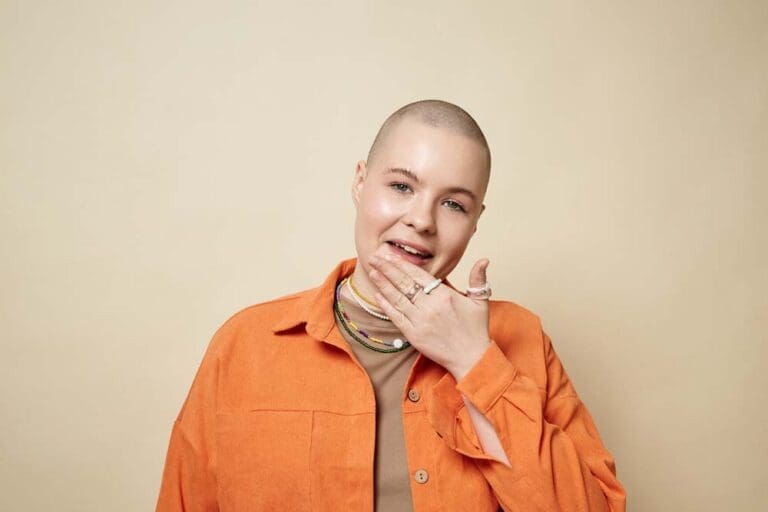
Ovarian cancer and hair loss go hand in hand for most patients who go through chemotherapy. For many women, this is the side effect they dread most, more than the nausea and more than the fatigue. Hair is visible in a way that other side effects simply aren’t.
This article is for you if you’re about to start chemo and want to know what’s actually coming, or if you’re already in it and looking for practical ways to cope. First, we want you to know: this is temporary, it’s manageable, and you are so much more than your hair.
Does Ovarian Cancer Itself Cause Hair Loss?
Ovarian cancer itself does not typically cause hair loss. In rare cases, certain hormone-producing ovarian tumors have been associated with hair changes, most notably Sertoli-Leydig cell tumors, which are the most common androgen-secreting ovarian tumors.
Luteinized thecomas can also produce androgens in some cases, though thecomas more typically secrete estrogen. These are uncommon tumors overall.
So when people ask can ovarian cancer cause hair loss, the more accurate answer is: chemotherapy for ovarian cancer causes hair loss, not the disease itself. The distinction matters, because it means hair loss is a treatment side effect, not a sign your cancer is worsening.
Why Chemo for Ovarian Cancer Causes Hair Loss
 Chemotherapy drugs for ovarian cancer are designed to attack fast-dividing cells. That’s what makes them effective against cancer. But hair follicle cells also divide rapidly and they get caught in the crossfire.
The primary culprit for hair loss and ovarian cancer treatment is paclitaxel (also known by the brand name Taxol), one of the two standard first-line chemotherapy drugs for ovarian cancer. Paclitaxel — not carboplatin, the other commonly paired drug — is what drives the hair loss in most ovarian cancer regimens.
Paclitaxel works by stabilizing microtubules in cells, which prevents them from dividing. This disrupts hair follicle matrix cells during their active growth phase, but the damage doesn’t follow a single pathway.
Research suggests follicular destruction involves several mechanisms: direct damage to follicle stem cells and dermal papilla cells, premature catagen entry, and anagen effluvium, where follicle cells undergo apoptosis (cell death), causing hair to break and shed.
Research on chemotherapy-induced alopecia (CIA) in ovarian cancer patients confirmed that taxanes like paclitaxel and docetaxel pose the highest risk for severe CIA, while platinum-based agents like carboplatin contribute less on their own.
Combination regimens, which are standard in ovarian cancer, make things worse. The same review noted that adding paclitaxel to carboplatin increased grade 2–4 alopecia from about 25% to 86% in one major trial.
What Hair Loss Actually Looks Like: A Timeline
Knowing what to expect can reduce the shock. Here’s a general timeline:
- Weeks 2 to 4 after starting chemo: Hair begins to fall out. It may happen gradually or in clumps. You might notice it on your pillow, in the shower drain, or in your brush.
- During treatment: Hair loss typically continues and may extend to eyebrows, eyelashes, arm hair, leg hair, and pubic hair. This is one of the hardest parts for many patients. Losing eyebrows and lashes can feel like losing your face.
- A few weeks post-treatment: Shedding begins to slow.
- 3 to 6 months after treatment ends: Hair starts growing back. Most people see meaningful regrowth within 6 to 12 months.
When it does grow back, it may return with a different texture or color, sometimes softer, sometimes curlier (this is sometimes referred to as “chemo curls”), sometimes temporarily grayer. These changes are usually not permanent.
Sign up to receive vital updates through email, and learn how you can get involved. "*" indicates required fieldsStay informed
Ovarian Cancer and Hair Loss: Practical Advice
There’s no guaranteed way to prevent hair loss from paclitaxel-based chemotherapy, but you’re not without options. Some approaches may reduce how much you lose, while others can help support faster regrowth once treatment ends. Here’s what’s actually worth trying.
Cold Caps (Scalp Cooling)
The most studied option for reducing ovarian cancer hair loss is scalp hypothermia, commonly called cold cap therapy.
A tightly fitted cap cooled by chilled liquid is worn before, during, and after each infusion. The cold constricts blood vessels in the scalp, limiting how much chemotherapy reaches the hair follicles.
Does it work? Partially. Research shows cold caps can reduce the severity of hair loss for some patients, but they don’t guarantee you’ll keep your hair. A weekly paclitaxel schedule resulted in significantly less grade 2 alopecia (29%) compared to the standard every-three-week schedule (59%). Dosing schedule matters, too, not just the drug itself.
Cold caps aren’t right for everyone. They’re not recommended if:
- You have certain cold-sensitivity conditions (cryoglobulinemia, cold agglutinin disease)
- Your oncologist has concerns about scalp metastasis risk
Cold caps also require extra time at the infusion center: typically 30 minutes before, during, and up to 90 minutes after treatment. That’s a real time commitment on already long chemo days.
It’s also important to know that there are different scalp cooling systems and not every infusion center offers them. The brand available can affect how the process works, including how long cooling sessions last and whether the caps are machine-based or manually changed throughout treatment.
Ask your care team whether scalp cooling is available at your center, which system they use, and whether it’s appropriate for your specific chemotherapy regimen.
Two organizations that help patients access cold caps:
- Hair To Stay: a nonprofit offering need-based grants to offset the cost of scalp cooling systems
- Rapunzel Project: a resource and advocacy organization for scalp cooling access
Some insurance companies cover cold caps as medically necessary. It’s worth a call to your insurer before you assume it’s out of pocket.
Minoxidil
Some research suggests that minoxidil (Rogaine) applied topically after chemotherapy may help speed up hair regrowth, though it’s unlikely to prevent loss during treatment. More research is still needed. Ask your oncologist or dermatologist whether it makes sense for your situation.
Other Practical Tips For Patients
None of these will completely prevent hair loss, but they can make the experience more manageable and give you back a small sense of control during a time when so much feels out of your hands.
Before Chemo Starts
Cut your hair short. This isn’t just psychological prep. Shorter hair makes thinning less dramatic, and the transition to full loss feels less sudden. Some women choose to shave their heads proactively, on their own terms, before the shedding begins.
Shop for head coverings now. Waiting until your hair is gone to figure out wigs, scarves, and hats is harder emotionally. Doing it before means you can match your natural color and texture if you want to. Ask your oncologist for a wig prescription. In the US, insurance may cover part or all of the cost.
Prep your scalp care routine. Use gentle, sulfate-free or baby shampoos. Stop chemical treatments: no color, perms, or relaxers. These weaken hair and make loss more traumatic when it happens.
During Treatment
Sleep on a satin pillowcase. It reduces friction and makes waking up to shed hair less jarring. Some women also wear a soft hair net or cap at night.
Be gentle. Use a soft brush, wash hair only as needed, and avoid heat styling entirely. The hair you still have is fragile.
Consider shaving your head. Many women find that taking control — choosing when to shave rather than watching hair fall out — is empowering. Use an electric razor to avoid skin irritation.
Protect your scalp from the sun. Without hair, your scalp is completely unprotected. Sunscreen or a hat is essential when you’re outside.
After Treatment
Don’t rush the regrowth process. New hair is delicate. Hold off on coloring, bleaching, or chemical processing for as long as you can, ideally several months. Give your follicles time to stabilize.
Talk to your care team if hair doesn’t return. In rare cases involving very high doses of certain drugs (particularly docetaxel), hair loss can persist longer than expected. This is uncommon, but worth discussing if regrowth seems stalled.
On the research front, there are some early but promising investigations worth knowing about. One area explores low-intensity ultrasound as a way to reverse taxane-stabilized microtubules in hair follicles. Another is looking at combining scalp cooling with topical N-acetylcysteine, an antioxidant, to better protect follicles during treatment.
Both are still in pre-clinical stages, so they’re not yet available to patients. But they signal that researchers are actively working on better solutions for chemotherapy-induced hair loss.
The Emotional Weight of Hair Loss
We’d be doing you a disservice if we only talked about the physical side.
Hair loss is one of the most psychologically distressing side effects of cancer treatment. That’s not vanity. Hair is tied to identity, femininity, health, and how we move through the world. Losing it makes cancer visible in a way that’s hard to ignore.
Some women find comfort in wigs that mirror their previous look. Others lean into hats and scarves as a form of self-expression. And some decide to go bare, on their own terms. There is no right way.
What matters most is that you’re not carrying this alone. Connecting with others who’ve been through it — such as through ovarian cancer support groups — can make an enormous difference. Hearing “I went through this, and I’m still here, and my hair grew back” from someone who’s lived it lands differently than reading it on a page.
Programs like Look Good Feel Better offer free virtual and in-person workshops for women in cancer treatment, covering makeup, skincare, and hair alternatives. It’s practical, it’s free, and it connects you with other women at the same stage.
Hair Loss as One Part of a Bigger Picture
Hair loss doesn’t happen in isolation. It’s arriving at the same time as fatigue, nausea, neuropathy, and a dozen other changes your body is trying to process all at once. That’s a lot.
It’s also worth understanding that hair loss, as visible and emotionally heavy as it is, is just one piece of what ovarian cancer chemotherapy side effects can look like. Knowing what else might be coming, and why, can make the whole experience feel slightly less like the ground is constantly shifting beneath you.
For most patients on standard paclitaxel-based regimens, hair loss is a near-certainty. But it is also temporary. Your hair will almost certainly come back, often within a few months of finishing treatment. What matters most right now is that you have accurate information, real support, and people in your corner who understand the stakes.