
Ovary Function Explained: What Your Ovaries Do and Why It Matters
July 28, 2026

Most people think of ovaries as just egg storage. They’re more than that.
Your ovaries are endocrine organs. They release hormones that reach your bones, your heart, your brain, your skin, and your mood, which is why losing ovary function affects so much more than fertility. Two almond-sized glands. Outsized influence.
Here’s what your ovaries actually do, how that job changes at 25, 45, and 65, and which symptoms mean it’s time to call a doctor.
What Are the Ovaries?
Your ovaries are small, oval-shaped glands that form a crucial part of the female reproductive system. Each ovary is roughly the size of an almond — about 3 to 5 centimeters long — and you have one on each side of your uterus.
Despite their small size, ovaries pack an outsized punch when it comes to your health. They’re part of both your reproductive system and your endocrine (hormone) system, which means their influence extends throughout your entire body.
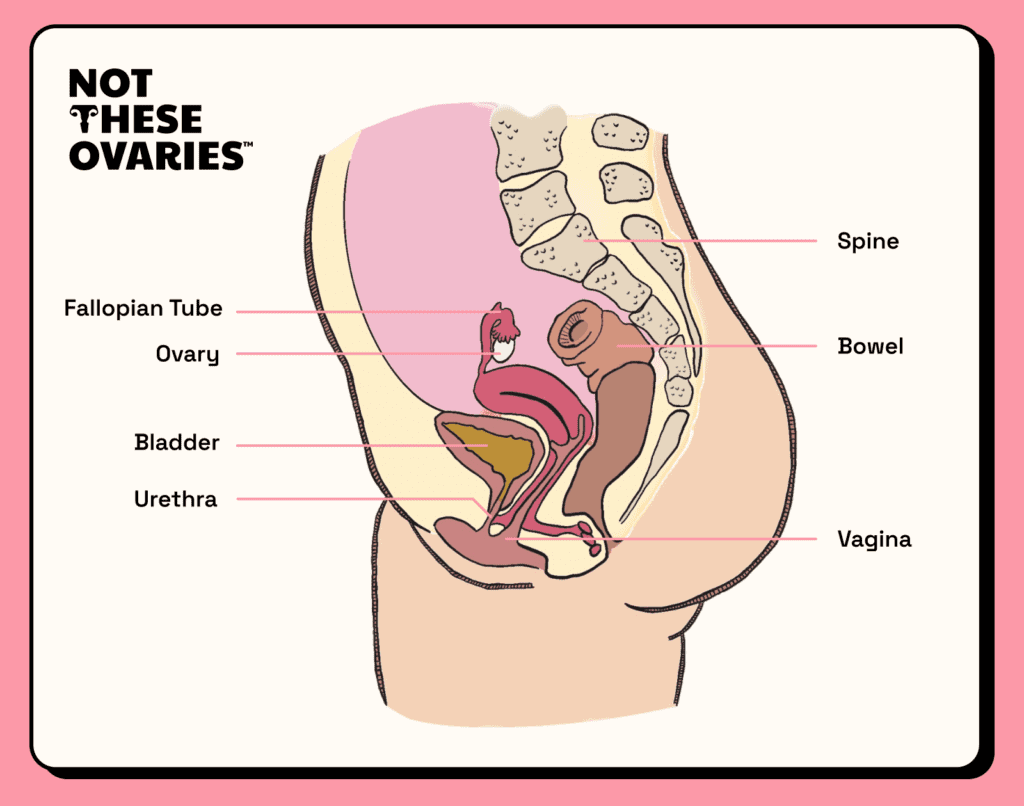
Where Are the Ovaries Located?
Your ovaries sit in your lower abdomen, one on the right side and one on the left side of your uterus. They’re held in place by several ligaments and muscles:
- The ovarian ligament connects each ovary to your uterus
- The suspensory ligament (also called the infundibulopelvic ligament) connects your ovaries to your pelvic wall and carries the ovarian artery, vein, nerve plexus, and lymphatic vessels
- The broad ligament provides additional support and contains the ovarian ligament, round ligament of the uterus, and IP ligament; the subdivision of it that attaches the ovary is the mesovarium and it encloses the ovary neurovascular supply
Your ovaries don’t actually touch your uterus. They’re positioned near your fallopian tubes, which extend from your uterus with finger-like projections called fimbriae that sweep released eggs into the tubes.
It’s worth noting that your ovaries are located close to other organs, like your bladder, intestines, and ureters (tubes that carry urine from your kidneys). This proximity explains why ovarian cancer symptoms often include bloating, digestive changes, and urinary issues.
The Two Main Functions of Ovaries
The function of ovaries breaks down into two essential jobs: egg production and hormone creation.
Producing and Releasing Eggs
Here’s something remarkable: you’re born with all the eggs you’ll ever have. A female baby develops with approximately 1 to 2 million eggs already in her ovaries. By puberty, that number drops to around 300,000 through a natural process of cell death.
During your reproductive years, only about 400 eggs will actually go through ovulation: the process of being released from your ovary.
How ovulation works:
Each month during your menstrual cycle, several eggs begin to mature inside fluid-filled sacs called follicles. Usually, only one follicle becomes dominant and releases its egg roughly 14 days before your next period starts. In a textbook 28-day cycle, that lands on day 14. If your cycles run 32 or 35 days, ovulation happens later: a detail that trips up a lot of women trying to conceive or track symptoms.
The released egg travels through the fallopian tube toward your uterus, where it may meet sperm and become fertilized.
If fertilization doesn’t occur, the egg dissolves, and you get your period about two weeks later.
This monthly cycle continues from puberty through menopause, typically from your early teens until around age 51.
Creating Essential Hormones
What is the function of ovaries beyond egg production? They’re your body’s primary source of female sex hormones.
Your ovaries produce three key hormones:
Estrogen is the star player. It does far more than support reproduction. Estrogen helps:
- Regulate your menstrual cycle
- Develop secondary sex characteristics during puberty (breasts, body shape, body hair patterns)
- Maintain bone density
- Support cardiovascular health
- Keep your skin elastic and healthy
- Regulate cholesterol levels
- Support brain function and mood
- Keep vaginal tissue healthy and lubricated
Progesterone rises in the second half of your menstrual cycle. It prepares your uterine lining for potential pregnancy by thickening it so a fertilized egg can implant. If pregnancy occurs, progesterone levels stay high to support the developing baby. If not, progesterone drops and triggers your period.
Testosterone (yes, really) is also produced in small amounts by your ovaries. While we think of testosterone as a male hormone, women need it, too: for sex drive, bone strength, and muscle mass.
Learn more: “Estrogen vs Progesterone: A Guide for Ovarian Cancer Patients”
How Many Eggs Do You Have Left? Understanding Ovarian Reserve
If you’ve ever wondered whether there’s a way to know how many eggs you have left, the answer is: sort of.
Ovarian reserve describes your remaining egg supply. Doctors estimate it three ways, usually together:
- AMH (anti-Müllerian hormone) — a blood test. AMH is produced by the small follicles in your ovaries, so the level roughly tracks how many follicles you have left. It can be drawn at any point in your cycle.
- FSH (follicle-stimulating hormone) — a blood test, typically drawn around day 3. When egg supply drops, the pituitary works harder and FSH climbs.
- Antral follicle count (AFC) — a transvaginal ultrasound where your provider counts visible follicles, usually in the first few days of your cycle.
Now the part the at-home test kits tend to bury: ovarian reserve testing does not measure egg quality. It doesn’t tell you whether you’ll get pregnant, and it can’t predict when you’ll reach menopause. Egg quality is driven largely by age. AMH is an inventory count, not a fertility forecast.
So what is it good for? It predicts how your ovaries are likely to respond to fertility drugs, which makes it genuinely useful if you’re planning IVF, weighing oocyte cryopreservation, or facing treatment that could damage ovarian function.
That last scenario matters enormously for young women diagnosed with ovarian cancer. If fertility is something you want to protect, ovarian reserve testing usually needs to happen before treatment begins, not after.
It’s one of the first conversations to have with your care team, and one that too often gets skipped in the rush of a new diagnosis. If a fertility-preserving approach is on the table, ask about fertility-sparing surgery in ovarian cancer early.
How Ovaries Change Throughout Your Life

Your ovaries aren’t static organs. They evolve dramatically from birth through your senior years. The size, activity level, and hormone production of your ovaries shift in response to age and life stage.
During Reproductive Years
From puberty to menopause, your ovaries are in their prime working years. They sit at the upper end of their normal size range and produce regular hormone cycles.
Your ovaries typically take turns releasing eggs each month, though it’s not a strict alternating pattern. Sometimes the same ovary releases eggs for several months in a row.
After Menopause
Menopause occurs when your ovaries stop releasing eggs and dramatically reduce hormone production. The average age is 51, but it can happen earlier or later.
Post-menopause, your ovaries shrink considerably, down to about 2 centimeters, roughly the size of a kidney bean. Ovarian volume declines with each decade after age 30, with the most dramatic changes occurring around and after menopause.
The drop in estrogen and progesterone production can cause:
- Hot flashes and night sweats
- Mood changes
- Sleep disruptions
- Vaginal dryness
- Decreased bone density
- Changes in cholesterol levels
Many women use hormone replacement therapy (HRT) to manage these symptoms. For survivors, whether HRT is safe depends heavily on cancer type and hormone receptor status. We cover that in detail in “Can you take estrogen after ovarian cancer?” And because bone loss accelerates sharply once estrogen drops, menopause and osteoporosis deserves attention early, not after a fracture.
But here’s what most people get wrong about menopause: your ovaries don’t shut off.
Egg release stops. Cyclic estrogen production stops. Androgen production largely doesn’t. As follicles are depleted, the ovarian stroma keeps producing testosterone and androstenedione, and rising LH levels stimulate that production.
Research comparing postmenopausal women with intact ovaries to those who’ve had both ovaries removed has found substantially lower circulating testosterone in the surgical group — roughly half, in some studies.
Why does that matter? Because “you’re postmenopausal, so your ovaries aren’t doing anything anyway” is still said in exam rooms. It isn’t accurate. Postmenopausal ovaries remain hormonally active organs, and that changes the calculation around removing them.
What’s Inside an Ovary?
The microanatomy of your ovaries reveals three distinct layers:
- The outer epithelium (germinal epithelium): a protective coating of simple cuboidal cells; under the germinal epithelium is a layer of connective tissue called the tunica albuginea, then the cortex, then the medulla
- The cortex: the middle layer containing all those follicles with developing eggs, made of connective tissue
- The medulla: the innermost core containing blood vessels, lymphatic vessels, and nerves
This structure explains why ovarian issues can affect your entire body. The rich blood supply means hormones can quickly enter your bloodstream, and the dense nerve connections explain why ovarian problems often cause pain.
Common Conditions Affecting Ovary Function
Several conditions can disrupt how your ovaries work, affecting everything from your menstrual cycle to your ability to conceive. Some are temporary and resolve on their own, while others require ongoing management or treatment.
Ovarian Cysts
These fluid-filled sacs develop on or in your ovaries. Most are functional cysts. They form naturally during your menstrual cycle when a follicle doesn’t release its egg properly or when the empty follicle doesn’t dissolve as it should.
Functional cysts usually resolve on their own within two to three menstrual cycles. But some cysts grow large, cause pain, or rarely become cancerous. Learn more about what causes ovarian cysts, and if you’ve been told to watch a mass, understanding the differences between ovarian cyst vs tumor will help you ask better questions.
Polycystic Ovary Syndrome (PCOS)
The World Health Organization estimates PCOS affects 10 to 13% of women of reproductive age globally and that up to 70% of affected women worldwide have never been diagnosed. In PCOS, follicles develop but fail to release eggs, creating multiple small cysts around the ovary’s outer edge.
Symptoms include irregular periods, acne, excess hair growth, and difficulty conceiving. PCOS is also associated with insulin resistance and increased risk of type 2 diabetes and uterine cancer.
Endometriosis
When tissue similar to your uterine lining grows outside your uterus, including on your ovaries, it’s called endometriosis. This can cause painful cysts called endometriomas. Understanding the connection between endometriosis and ovarian cancer is important for long-term health monitoring.
Primary Ovarian Insufficiency
Formerly called premature ovarian failure, this condition occurs when your ovaries stop functioning normally before age 40. It can result from genetic disorders, autoimmune diseases, or exposure to toxins like chemotherapy, radiation, or cigarette smoke.
Ovarian Cancer
Ovarian cancer develops when cells grow abnormally and uncontrollably in the ovaries — or, as researchers increasingly recognize, in the fallopian tubes.
A significant share of what we call ovarian cancer, particularly high-grade serous disease, appears to begin as precancerous changes in the fallopian tube before spreading to the ovary. That shift in understanding is reshaping prevention research. It’s also why fallopian tube lesions found during surgery are taken seriously.
Ovarian cancer ranks fifth in cancer deaths among women and causes more deaths than any other cancer of the female reproductive system.
The challenge with ovarian cancer is that symptoms often don’t appear until the disease has progressed. When they do occur, symptoms can include:
- Persistent bloating
- Abdominal or pelvic pain
- Difficulty eating or feeling full quickly
- Urinary urgency or frequency
- Unexplained weight loss or gain
- Fatigue
- Changes in bowel habits
Because these symptoms are easy to dismiss as digestive issues or stress, many cases aren’t detected early. There’s currently no reliable ovarian cancer screening test for the general population, which makes awareness of symptoms crucial.
Different types of ovarian cancer behave differently. Borderline ovarian cancer and low-grade serous ovarian cancer are rarer subtypes that primarily affect younger women and require specialized treatment approaches, including approaches that standard chemotherapy protocols simply weren’t designed for.
What Happens to Ovary Function If Your Ovaries Are Removed?
Surgical removal of the ovaries is called an oophorectomy. Understanding what changes — and what doesn’t — helps you have a real conversation with your surgeon.
If one ovary is removed: the remaining ovary usually takes over. Most women continue to ovulate, menstruate, and produce normal hormone levels. Pregnancy remains possible.
If both ovaries are removed: hormone production drops immediately. If you were premenopausal, you enter menopause that day, not gradually. This is surgery-induced menopause, and it tends to hit harder and faster than natural menopause because there’s no years-long transition. Hot flashes, sleep disruption, bone loss, and mood changes can arrive within days.
Because ovaries stay hormonally active well past menopause, removing them has consequences beyond fertility. Long-term observational data found that among women who never used estrogen therapy, bilateral oophorectomy before age 50 was associated with higher rates of all-cause mortality, coronary heart disease, and stroke compared with keeping the ovaries — and that at no age was oophorectomy linked to better overall survival. Estrogen therapy appears to offset much of that risk in women who can safely take it.
Read that in context, please. Those findings come from women having hysterectomy for benign conditions. They are not a verdict on your surgery. If you have ovarian cancer, a high-risk mutation, or a suspicious mass, removal may be exactly the right decision and the calculus is entirely different. And if your ovaries are already gone, it’s a reason to ask your care team about hormone management, bone density monitoring, and cardiovascular screening going forward.
What this research really argues for is a conversation, not a default. Ovaries shouldn’t be removed reflexively during unrelated surgery in a low-risk woman. If a surgeon proposes it, fair questions include: What’s my actual ovarian cancer risk? Would removing just the fallopian tubes accomplish the same prevention goal? What’s the plan for my bones and heart afterward?
For the differences between these procedures, see oophorectomy vs hysterectomy and our full guide to oophorectomy surgery.
How Cancer Treatment Affects Ovary Function
If you’re facing treatment, this is the section to bring to your appointment.
Chemotherapy damages rapidly dividing cells. That includes the cells supporting your follicles. Some ovarian cancer chemotherapy regimens are far harsher on the ovaries than others, with alkylating agents among the most damaging.
The result can be temporary loss of periods, or permanent primary ovarian insufficiency. Two factors drive the outcome most: your age at treatment and your ovarian reserve going in. Younger women with higher reserve are more likely to recover function. Recovery, when it happens, can take months.
Pelvic radiation can damage the ovaries directly. Depending on dose and field, ovarian function may not return. In some cases, surgeons can perform an ovarian transposition — surgically moving the ovaries out of the radiation field — before treatment starts.
Surgery removes ovarian tissue outright, with effects that depend on whether one or both ovaries are taken.
Hormone-blocking therapies are a different story. Aromatase inhibitors and similar drugs suppress hormone activity rather than destroying ovarian tissue, and effects are often reversible once treatment ends, though this varies by drug and duration.
Three things worth doing before treatment begins:
- Ask directly about fertility risk. Not “will I be able to have kids” but “which agents am I receiving, and what’s the gonadotoxic risk of each?”
- Ask for a fertility preservation referral before the first infusion. Egg or embryo freezing needs a window of time that treatment schedules don’t always leave. Ovarian tissue cryopreservation is another option in some centers.
- Ask what happens after. Sudden menopause at 32 is a different medical situation than menopause at 52, and it needs its own management plan: bone density, cardiovascular health, sexual health, and symptom relief.
If you’re managing symptoms now, our guide on menopause hot flashes covers relief strategies specific to survivors.
Treatment effects vary significantly by drug, dose, age, and individual factors. Always discuss your specific regimen with your oncology team.
Problems with Ovary Function? When to Call Your Doctor
Most ovarian symptoms turn out to be benign. But a few warrant a same-day call, and a few warrant an ER visit.
Go to the emergency room for:
- Sudden, severe one-sided pelvic pain, especially with nausea or vomiting
- Pelvic pain with fever
- Fainting, or pain severe enough that you can’t stand up straight
Call your doctor within a week if you have:
- Bloating that’s persistent — most days for two to three weeks — rather than coming and going with your cycle
- Feeling full quickly, or a noticeable change in appetite that doesn’t resolve
- Pelvic or abdominal pain that keeps recurring
- New urinary urgency or frequency without infection
- Abnormal vaginal bleeding, especially after menopause
- Unexplained weight loss or gain
- Symptoms that are new for you, persistent, and progressive
That last line is the pattern worth memorizing: new, persistent, progressive. Ovarian symptoms are common and usually harmless in isolation. The combination is what matters.
And if you’re being told repeatedly that it’s IBS, stress, or normal, ask specifically about ovarian causes and request imaging. If ovarian cancer is suspected or confirmed, ask for referral to a gynecologic oncologist. Research consistently shows that specialist surgical care improves outcomes.
Protecting Your Ovarian Health
While there’s no guaranteed way to prevent all ovarian problems, you can support your ovarian health:
- Don’t smoke. Cigarette smoke damages eggs’ genetic material and causes them to die off faster, potentially bringing on earlier menopause and reducing fertility.
- Maintain a healthy weight. This helps regulate hormones and menstrual cycles, and can ease PCOS symptoms.
- Get annual pelvic exams. Regular checkups help catch issues like cysts and tumors that often don’t cause symptoms initially.
- Know your family history. Genetic factors play a role in ovarian cancer risk, especially mutations in BRCA genes. If ovarian, breast, or colorectal cancer runs in your family, ask about BRCA testing ovarian cancer.
- Listen to your body. If something feels off, whether it’s pain, irregular bleeding, or persistent bloating, trust your instincts and see your doctor.
Frequently Asked Questions About Ovary Function
Can you get pregnant with one ovary? Yes. The remaining ovary typically compensates, ovulating most or all months. Fertility rates for women with one ovary are close to those with two, assuming the remaining ovary and at least one fallopian tube are healthy.
Do ovaries stop working after menopause? Not entirely. Egg release and cyclic estrogen production stop, but the ovarian stroma continues producing androgens — including testosterone — for years afterward. Postmenopausal ovaries are less active, not inactive.
Do your ovaries still work after a hysterectomy? If your ovaries were left in place, yes. You’ll stop having periods because the uterus is gone, but your ovaries keep producing hormones and releasing eggs until natural menopause. Some studies suggest hysterectomy may bring menopause on somewhat earlier, likely due to changes in blood supply.
Can you feel your ovaries? Not normally. Healthy ovaries sit deep in the pelvis and aren’t palpable from outside. Some women notice mid-cycle ovulation pain — mittelschmerz — as a brief one-sided twinge. Pain that’s severe, persistent, or worsening is not normal and should be evaluated.
Which ovary releases an egg each month? It varies, and it isn’t a strict left-right alternation. The same ovary may release eggs several months in a row.
What is the function of ovaries in simple terms? Two jobs: produce and release eggs, and produce hormones — primarily estrogen, progesterone, and testosterone — that regulate the menstrual cycle and support bone, heart, brain, and sexual health.
The Bottom Line
Ovaries function as more than egg storage facilities. They’re hormone powerhouses that influence your entire body: from your bones to your brain, from your cardiovascular system to your skin.
Understanding what your ovaries do and how they change throughout your life helps you recognize when something’s wrong. Because ovarian problems often cause vague symptoms that overlap with other conditions, knowing what’s normal for your body is your best tool for early detection.
If you’re experiencing concerning symptoms, don’t wait. Consult a healthcare provider — preferably a gynecologic oncologist if ovarian cancer is suspected. Early evaluation can make all the difference.