
Chemo Brain: What It Is, Why It Happens, and How to Cope
May 26, 2026

Chemo brain is one of the most frustrating (and least talked about) side effects of ovarian cancer treatment. You’re already navigating so much: surgery, chemotherapy, follow-up scans, the emotional weight of a diagnosis.
And then, on top of all of it, your memory starts slipping. You forget words mid-sentence. You walk into a room and can’t remember why. You read the same paragraph three times and still can’t retain it.
It’s disorienting. And for many ovarian cancer patients, it’s very real.
What Is Chemo Brain?
Chemo brain — also called chemo brain fog, cancer-related cognitive impairment, or cognitive dysfunction — refers to changes in memory, thinking, concentration, and mental clarity that occur during or after cancer treatment.
The name is a bit of a misnomer, actually. While chemotherapy is often the most cited cause, research now shows that cognitive changes can stem from multiple factors: the cancer itself, surgery, hormone therapy, radiation, immunotherapy, and even the psychological stress of a diagnosis.
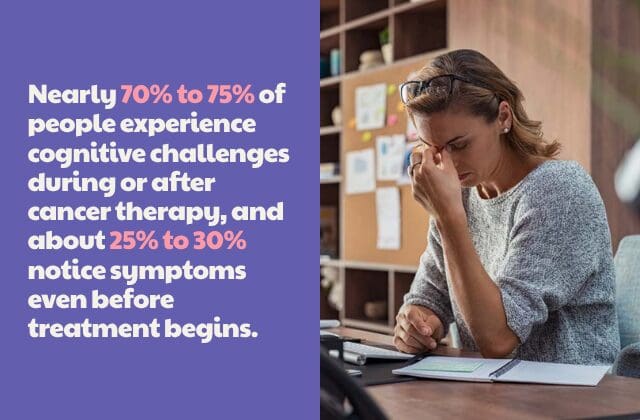
Nearly 70% to 75% of people experience cognitive challenges during or after cancer therapy, and about 25% to 30% notice symptoms even before treatment begins.
For ovarian cancer patients specifically, the picture is even more complex. According to research, nearly 70% of ovarian cancer patients report cognitive dysfunction following treatment. Unlike other types of cancers where chemo brain has been more extensively studied, research specific to ovarian cancer patients remains limited.
Why Are Ovarian Cancer Patients Especially Vulnerable?
Several factors make ovarian cancer patients particularly susceptible to chemo brain fog.
First, many are treated with platinum-based chemotherapy drugs like carboplatin and cisplatin. Cisplatin has been shown to affect neurons both in lab and animal studies, including by reducing dendritic branching and spine density and causing mitochondrial DNA damage, which can lead to oxidative stress thought to contribute to cognitive dysfunction.
Second, many ovarian cancer patients — especially those diagnosed with low-grade serous ovarian cancer, which tends to affect younger women — undergo surgical removal of the ovaries. This causes immediate, abrupt menopause.
The cognitive problems are further compounded by the fact that some ovarian cancer patients, diagnosed before naturally occurring menopause, undergo oophorectomy surgery which causes immediate surgically induced menopause.
The hormonal drop that follows surgery-induced menopause, combined with the neurotoxic effects of chemotherapy, creates a particularly challenging environment for brain function.
Third, anxiety, depression, fatigue, sleep disruption, and pain, all common in cancer patients, independently worsen cognitive performance. It’s often a compounding effect, not a single cause.
Chemo Brain Symptoms: What to Watch For
 Chemo brain symptoms vary from person to person, and they’re often subtle enough that patients dismiss them or feel embarrassed to bring them up.
Common symptoms include:
- Forgetting words mid-conversation, or struggling to find the right ones
- Short-term memory lapses, and forgetting what you just said, read, or did
- Difficulty concentrating or staying on task
- Trouble learning new information or skills
- Mental fog or feeling mentally “slow”
- Difficulty multitasking
- Taking longer than usual to complete familiar tasks
- Feeling disorganized or unusually scattered
The changes are often mild and subtle. But if you have them, they can reduce your quality of life.
It’s also worth noting that changes in thinking can happen at any time: before, during, and after cancer treatment. So if you’re noticing cognitive changes before you’ve even started chemo, that doesn’t mean you’re imagining it.
What Causes Chemo Brain?
Honestly, the full picture isn’t completely understood yet. But researchers have identified several contributing mechanisms:
Chemotherapy’s effect on the brain. Chemo drugs can cross the blood-brain barrier and directly affect neurons and neural stem cells. The hippocampus (a region critical to memory) shows dramatic effects when exposed to cisplatin, including decreased dendritic spine density and potentially lasting or persistent excitatory synapse damage.
Inflammation and cytokines. Cancer and its treatment increase cytokine production, and higher cytokine levels have been detected in hippocampal structures. The inflammation response itself may be part of what disrupts cognitive function.
Hormonal changes. Estrogen plays a role in brain function. When ovarian cancer treatment triggers early menopause, the resulting hormone loss can amplify cognitive symptoms.
Psychological stress. The stress of diagnosis alone can affect cognition. Fear, grief, anxiety, and uncertainty are not just emotional experiences; they have measurable neurological effects.
Other treatment-related factors. Anemia, fatigue, pain medications, sleep disruption, and nutritional deficits all contribute. Managing these secondary conditions often helps with cognitive symptoms, too.
Oxidative stress. Chemotherapy and cancer-related inflammation can increase the production of reactive oxygen species (ROS), unstable molecules that can damage cells throughout the body, including brain cells. Researchers believe this oxidative stress may contribute to problems with memory, attention, and processing speed.
Mitochondrial injury. Some chemotherapy drugs can damage mitochondria, the structures inside cells responsible for producing energy. When neurons can’t efficiently generate energy, cognitive functions like focus, memory, and mental clarity may be affected.
Does Chemo Brain Ever Go Away?
This is the question most patients want answered. And the honest answer is: it depends.
For many people, symptoms gradually improve after treatment ends. For most, the fog lifts within months to a year. But some patients experience longer-lasting effects. For some people, symptoms can be long-term, continuing for years after treatment has finished.
What we do know is that early recognition helps. The sooner you flag cognitive changes to your care team, the sooner contributing factors — like anemia, sleep issues, or depression — can be addressed.
How to Cope: Practical Strategies That Actually Help
There’s no single approved treatment for chemo brain yet. But there are evidence-informed strategies that many patients find genuinely helpful.
Build Structure Into Your Day
When your brain can’t be relied on to hold everything, your environment picks up the slack. Use a planner, a notes app, or even sticky notes posted where you’ll see them. Write things down immediately; don’t rely on remembering them later.
Keep important items like keys, phone, and medications in the same designated spot every single time. Reduce the number of decisions your brain has to make.
Prioritize Sleep
Fatigue worsens chemo brain, and the relationship goes both ways. Poor sleep makes cognitive symptoms worse, and cognitive strain can make sleep harder. If you’re struggling with sleep, talk to your oncologist. This isn’t a minor issue. For more on managing this, see our guide on ovarian cancer and insomnia.
Move Your Body
Regular physical activity is good for your brain. It can improve thinking and focus, and also help with stress, making you feel more alert and less tired. Even short, gentle walks count. You don’t need to run a 5K. Just move.
Eat to Support Your Brain
Nutrition matters more than people often realize during treatment. A well-nourished body supports better cognitive function. Limiting alcohol intake is also another step you can take.
Manage Stress Actively
Stress compounds cognitive difficulties. Mindfulness practices, meditation, and relaxation techniques have shown benefit in research settings. They won’t cure chemo brain, but they can take some of the edge off. Our post on stress management for cancer patients has practical techniques worth exploring.
Cognitive Rehabilitation
Cognitive rehabilitation identifies specific challenges (like memory and focus) and teaches coping strategies. Ask your oncologist for a referral to a neuropsychologist if your symptoms are significantly interfering with daily life or work. This is a legitimate medical issue and you’re entitled to support.
Talk to the People Around You
Tell your family, close friends, and coworkers what’s happening. You don’t owe anyone a detailed explanation, but letting people know can reduce pressure and create space for support. You probably notice your problems much more than others do, and friends and family may be able to help in practical ways once they understand what’s going on.
When to Talk to Your Doctor
Don’t wait until symptoms feel unbearable. Bring them up early and be specific.
Tell your care team:
- What symptoms you’re experiencing
- When they started and how often they occur
- Whether they’re getting better, worse, or staying the same
- How they’re affecting your daily life, work, or ability to care for yourself
Keeping a simple log or diary of your cognitive symptoms can help you communicate this clearly and ensures your doctor has the full picture. Bring a list of all medications, including supplements, to every appointment.
If symptoms are contributing to anxiety or depression, which they sometimes do, ask for a referral to a mental health professional.
The Bigger Picture: Coping with Chemo Brain
Chemo brain is one of many reasons why advancing ovarian cancer research matters so urgently. CRCD has tremendous quality-of-life implications for survivors of gynecologic cancers, yet research in this field is limited and underrepresents women diagnosed with these cancers.
That needs to change.
If chemo brain is affecting your life right now, you’re not alone. And you don’t have to white-knuckle your way through it. Talk to your care team, lean on your support system, and know that the research community and organizations like Not These Ovaries are working to better understand and address what survivors are living with every day.