
Beyond Treatment: 10 Ways to Manage Ovarian Cancer Fatigue and Get Your Energy Back
September 8, 2026
Ovarian cancer fatigue is one of the most common side effects of treatment, and for many women it’s the one that lingers longest.
It can have a way of making you feel like you’re failing at recovery, when really your body is doing exactly what an exhausted body does.
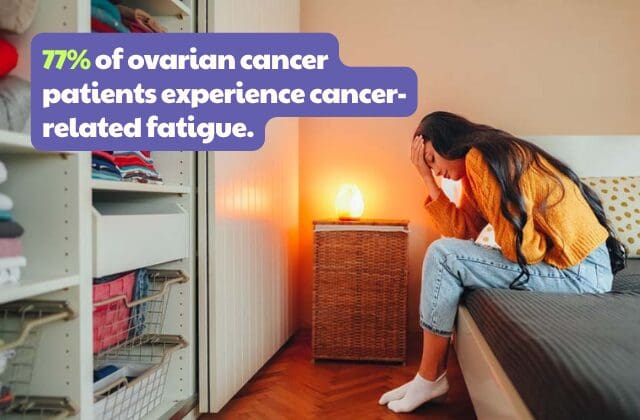
A 2025 paper pooled data from nine studies and found cancer-related fatigue (CRF) affects roughly 77% of ovarian cancer patients. This is a recognized medical problem with a name, a research base, and treatments that work.
Sign up to receive vital updates through email, and learn how you can get involved. "*" indicates required fieldsStay informed
Ovarian Cancer Fatigue is Not Regular Tiredness
This distinction matters, because it changes what you do about it.
Normal tiredness responds to sleep. You have a rough night, you catch up, you feel human again. Cancer-related fatigue doesn’t work that way. It’s exhaustion that’s out of proportion to what you actually did, and it isn’t repaired by rest.
Women describe it in specific, physical terms. Arms and legs that feel heavy. Needing to sit down halfway through making dinner. A brain that loses the word it was reaching for. Ten minutes of laundry costing an entire afternoon.
That mismatch between effort and cost is the clinical signature. It’s also why “get more sleep” doesn’t land too well as advice.
Fatigue rarely travels alone, either. It clusters with pain, low red blood cell counts, emotional distress, and disrupted sleep. Untangling which thread is pulling hardest is the whole job.
What Drives Fatigue During Ovarian Cancer Treatment
 Ovarian cancer and fatigue are linked through several mechanisms working at once. Most can be identified with straightforward testing, and several respond to treatment.
- Anemia. Platinum-based chemotherapy suppresses bone marrow, dropping the red blood cells that carry oxygen through your body. Low hemoglobin is one of the fastest things on this list to identify and treat.
- Low blood counts more broadly. Chemo affects white blood cells, too. Learn more in our article on neutropenia and ovarian cancer.
- Surgical menopause. If both ovaries were removed, estrogen didn’t taper over years. It dropped in hours. Night sweats that fragment sleep produce daytime exhaustion entirely on their own, and surgery-induced menopause is often mistaken for chemo fatigue long after chemo ends.
- Inflammation. Research on ovarian cancer patients specifically has linked higher levels of the inflammatory marker IL-6 to poorer sleep before surgery and a year afterward.
- Deconditioning. Weeks of reduced activity after abdominal surgery weaken muscle, which makes ordinary tasks harder, which pushes you toward more rest.
- Pain, nausea, and eating less than you think. Each one taxes your energy independently.
- Anxiety, low mood, and poor sleep. These are among the strongest predictors of who develops severe fatigue, and they’re treatable.
10 Ways to Manage Ovarian Cancer Fatigue
No single strategy solves this on its own. What works is layering several approaches and giving them time, since most of the evidence-backed options build slowly rather than delivering an overnight difference.
1. Move, Even When It’s the Last Thing You Want
This is the single best-supported treatment there is, and it feels completely counterintuitive.
One study pooled 113 randomized trials covering 11,525 patients and compared the four most commonly recommended treatments for cancer-related fatigue. Exercise and psychological interventions reduced fatigue during and after treatment. Pharmaceutical interventions did not deliver the same benefit.
Start small: a ten-minute walk, gentle stretching on the hard days, and seated exercises when standing feels like too much. Our guide to exercise and ovarian cancer breaks down what safe progression actually looks like during and after treatment.
Check with your care team first if you have bone metastases, low platelets, active infection, anemia, or balance problems.
2. Pace Yourself Instead of Pushing Through
Pacing means learning your own energy pattern and planning around it, rather than sprinting on good days and paying for it for three.
Track when you have the most energy. Morning for some, afternoon for others. Put the tasks that matter most into those windows. Spread activity across the week instead of stacking it into one heroic Saturday.
Healthcare professionals recommend rating your fatigue from 1 to 10 each day and keeping a record of what you tried and whether it helped. It works, because it turns a vague fog into information you can act on.
3. Treat Sleep as a Medical Issue
 Sleep disturbance and fatigue feed each other. According to research, sleep problems and fatigue predicted poor quality of life more strongly than clinical factors like treatment type or metastatic status.
Standard sleep hygiene measures remain the foundation. Keep consistent bed and wake times, get natural light in the morning, avoid screens in the evening, and stop caffeine several hours before bed. Limit daytime naps to 30 minutes and avoid them in the late afternoon, as longer or later naps make it harder to sleep at night.
Persistent insomnia is a treatable condition, not something to manage alone. Read more on ovarian cancer and insomnia and bring it to your oncologist.
4. Eat for Energy, not Perfection
Your body needs fuel to repair itself after surgery and chemotherapy, and protein matters especially. But nausea, mouth sores, taste changes, and appetite loss make that genuinely hard.
Eat little and often when full meals feel impossible. Stay hydrated throughout the day. Ask for a referral to a registered dietitian, which is a standard part of cancer care and not a luxury. Our ovarian cancer diet guide covers what the evidence actually supports.
5. Ask for Help Before You’re Desperate
Many patients hesitate to accept help, often because they don’t want to feel like a burden. The result is usually the same: pushing through until energy runs out entirely.
Assigning specific tasks makes this easier for everyone. Ask someone to handle the grocery run, manage school pickups, or drop off a meal. Open-ended offers are difficult to act on, so naming a concrete need helps both you and the person offering.
An occupational therapist can also assess your home and recommend practical equipment, such as perching stools for kitchen tasks or a shower seat. These adjustments conserve meaningful amounts of energy across the week, and your GP or care team can provide a referral.
6. Get Your Fatigue Assessed
Fatigue is consistently underreported by patients and undertreated by clinicians. Many women assume exhaustion is simply an unavoidable part of having cancer, so it never comes up during appointments.
It is worth raising directly. No blood test measures fatigue itself, which means your own description carries the diagnostic weight. Come prepared with specifics: when the fatigue began, whether it has worsened or improved, and which activities it now prevents.
From there, your team can order tests for hemoglobin, thyroid function, vitamin levels, and kidney and liver function. When a treatable cause is identified, addressing it can produce noticeable improvement within weeks.
7. Manage Your Pain, Because Pain is Exhausting
Unmanaged pain depletes energy and disrupts sleep, which in turn worsens fatigue. Stronger analgesics, however, can cause drowsiness of their own, so finding the right balance often takes some adjustment.
This is an ongoing discussion with your care team rather than a single prescription. Our guide to ovarian cancer pain outlines the management options worth raising at your next appointment.
8. Take the Mental Health Piece Seriously
Depression and anxiety are among the strongest predictors of persistent cancer-related fatigue. They also respond to treatment.
ASCO Guidelines recommend cognitive behavioral therapy and mindfulness-based programs to reduce fatigue severity both during treatment and after it ends. For moderate to severe post-treatment fatigue, CBT and mindfulness have the strongest evidence of anything available.
An ovarian cancer-specific randomized trial makes the point concretely: 72 women who had completed surgery and their first chemo cycle were randomized to nurse-led home-based exercise plus CBT or usual care. The intervention group’s fatigue scores dropped significantly, along with depression, and their sleep quality improved. The comparison group barely changed.
9. Try Mind-Body Approaches with Real Evidence
The same ASCO-SIO guideline found tai chi, qigong, and American ginseng helped during treatment, while yoga and acupressure helped after treatment ended.
Just as usefully, it named what doesn’t work. Clinicians are advised not to recommend L-carnitine, antidepressants prescribed for fatigue alone, or wakefulness agents like modafinil, and not to routinely recommend psychostimulants.
Always clear supplements with your oncologist first, since some interact with cancer drugs. For the broader stress picture, see stress management for cancer patients.
10. Find People Who Get It
In one meta-analysis, social support was the one factor that showed up as protective against cancer-related fatigue rather than as a risk.
Whether that’s an in-person group, an online community, or three women in a group chat who understand what a CA-125 result feels like, ovarian cancer support groups reduce the isolation that makes everything heavier.
Why Extreme Fatigue with Ovarian Cancer can Outlast Treatment
During chemo, exhaustion makes sense. You’re in treatment. Then the last cycle passes, the appointments thin out, and everyone assumes you’ve bounced back.
Except you haven’t. Because the tiredness often outlasts the chemotherapy itself by months.
Most people feel substantially better within 6 to 12 months after treatment ends. But cancer-related fatigue persists in roughly 20% to 30% of survivors well beyond that, and gynecologic cancer research puts chronic fatigue at about 25%.
Recovery isn’t a switch. It’s a slope. Judge yourself against three months ago, not against last week, and definitely not against who you were before diagnosis.
Maintenance therapy complicates this, too. If you’re on a PARP inhibitor or another maintenance drug, treatment hasn’t actually finished, and fatigue is a known side effect worth discussing rather than absorbing.
When Ovarian cancer Fatigue and Tiredness Need Medical Attention
Slowly, unevenly improving is the expected pattern. The following signs are departures from it, and each one deserves an appointment rather than more waiting:
- You’re breathless on stairs or your heart is racing, which points toward anemia
- Your fatigue is steadily worsening rather than settling, months after your last cycle
- New bloating, abdominal swelling, or pelvic pain alongside the exhaustion
- Fever, night sweats, or weight loss you didn’t intend
- You’d rate your fatigue 7 or higher out of 10, or you’ve stopped managing basic self-care
- Low mood that has stopped lifting
Call your team or go to the emergency room if you feel confused, dizzy, lose your balance, or are short of breath while resting.
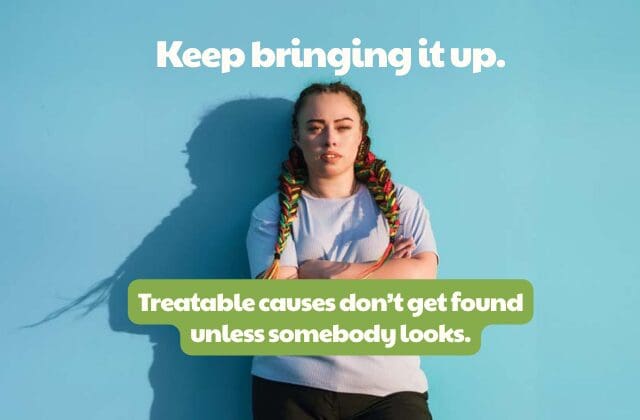
Fatigue on its own is rarely how recurrence announces itself. Exhaustion months after treatment is far more likely to be anemia, sleep, deconditioning, or thyroid than disease. The reason to report it isn’t that anyone expects bad news. It’s that treatable causes don’t get found unless somebody looks.
Ovarian Cancer-Related Fatigue Is Treatable
Cognitive changes often ride alongside the exhaustion, so if the fog feels as heavy as the tiredness, chemo brain is worth learning more about. And if fatigue is one of several symptoms weighing on your quality of life, palliative care for ovarian cancer is available at any point after diagnosis, not just at the end. It is symptom management, full stop.
Fatigue is not something you have to accept as the cost of survival. Bring it up at your next appointment, and keep bringing it up until someone looks for the cause.