Menopause Symptoms: A Complete List for Ovarian Cancer Patients and Survivors
October 19, 2026

Ask most people to name a menopause symptom and you’ll probably hear “hot flashes.” Maybe night sweats. Very few would guess a frozen shoulder, a new body odor, or acne that shows up for the first time since high school.
But estrogen does a lot more than regulate your cycle. It acts on your brain, skin, bones, heart, organs, and joints. When estrogen drops, the effects can show up almost anywhere.
For many women diagnosed with ovarian cancer, menopause doesn’t creep in over several years. It can start the day of ovarian cancer surgery. It can also be triggered by chemotherapy or hormone-blocking treatment. If you were diagnosed later in life, natural menopause may overlap with cancer care, which makes it harder to know which symptom is coming from where.
This guide lists the menopause symptoms you might experience, grouped by body system. Use it to put a name to what you’re feeling, and take it with you to your next appointment.
Key takeaways
- Menopause symptoms can affect nearly every part of the body, not just your internal thermostat.
- Removing both ovaries before natural menopause causes surgical menopause, which is sudden and often more intense.
- Chemotherapy and hormone therapies like aromatase inhibitors can also cause menopause or menopause-like symptoms.
- Some menopause symptoms overlap with ovarian cancer warning signs. New or persistent bloating, pain, or bleeding deserves a call to your doctor.
- Hormone therapy isn’t automatically off the table for survivors, but the decision depends on your cancer type.
Sign up to receive vital updates through email, and learn how you can get involved. "*" indicates required fieldsStay informed
Why Menopause Looks Different for Ovarian Cancer Patients
For many ovarian cancer patients, menopause isn’t a slow transition. It’s sudden, medically triggered, and sometimes decades earlier than expected.
Natural Menopause vs. Surgical Menopause
Natural menopause typically happens between ages 45 and 55. Before that comes perimenopause, a stretch of years when hormones rise and fall unpredictably and periods become irregular.
Surgical menopause is different. When both ovaries are removed before natural menopause (a bilateral oophorectomy), estrogen production stops almost at once. There’s no gradual runway.
That abrupt drop matters. One study found that women who have their ovaries removed before menopause tend to have more severe and longer-lasting symptoms, along with higher risks to mood, bone, heart, and sexual health. And a study of women who had risk-reducing surgery found they scored about twice as high on a menopause symptom scale as women who went through menopause naturally.
Here’s how the two compare at a glance:
- How it starts: Natural menopause unfolds gradually over several years. Surgical menopause begins as soon as both ovaries are removed.
- Perimenopause: Natural menopause comes with it. Surgical menopause skips it entirely.
- Irregular periods first: Common before natural menopause, but not part of surgical menopause.
- Symptom intensity: Varies widely with natural menopause. Often more intense with surgical menopause.
A hysterectomy that leaves the ovaries in place doesn’t cause immediate menopause, and neither does a salpingectomy.
Other Treatments That Can Trigger Menopause Symptoms
Surgery isn’t the only route. Other ovarian cancer treatments can bring on menopause or symptoms that feel just like it:
- Chemotherapy can damage the ovaries. Depending on your age and the drugs used, this may be temporary or permanent.
- Aromatase inhibitors, such as letrozole, lower estrogen levels on purpose. They’re often used for hormone-sensitive cancers like low-grade serous ovarian cancer.
- Tamoxifen blocks estrogen’s effects in some tissues and can cause hot flashes.
- Risk-reducing surgery is recommended for some people with inherited mutations, including BRCA and Lynch syndrome.
Why Younger Patients Often Feel It Hardest
 Low-grade serous ovarian cancer (LGSOC) and borderline ovarian tumors (BOT) tend to affect younger women than high-grade ovarian cancer does. That means some patients face menopause in their 20s, 30s, or early 40s, often alongside difficult decisions about fertility.
Early menopause also means more years without estrogen’s protective effects on bones and the heart. That’s one reason follow-up care after treatment matters so much.
The Complete List of Menopause Symptoms
Below are symptoms linked to menopause, grouped by the part of the body they affect. You won’t have all of them. Some women have a handful, others have many, and the mix can shift from month to month.
Hot Flashes and Temperature Changes
Hot flashes are the symptom most people know, but they’re only part of the picture. When estrogen drops, the brain’s temperature control center can misfire, leaving you suddenly overheated, drenched in sweat, or chilled.
Hot Flashes
A sudden wave of intense heat that comes from within the body, usually across the chest, neck, and face, often with flushing and sweating. Up to 80% of women experience hot flashes or night sweats during the menopause transition, and in a large U.S. study they lasted more than seven years for over half of the women with frequent symptoms. Our guide to menopause hot flashes covers relief strategies for survivors.
Night Sweats
Hot flashes that strike during sleep, sometimes soaking your sheets.
Chills and Cold Flashes
Some women feel suddenly cold or shivery, often right after a hot flash passes.
Sleep and Energy
Poor sleep and low energy are some of the most common complaints during menopause, and they tend to feed each other. A few rough nights can make every other symptom feel harder to manage.
Insomnia
Trouble falling asleep, waking at 3 AM, or not being able to get back to sleep. Night sweats, anxiety, and nighttime bathroom trips all play a part. See ovarian cancer and insomnia for practical tips.
Fatigue
A heavy, drained feeling that sleep doesn’t fix. After cancer treatment, it can be hard to separate menopause fatigue from treatment fatigue, and often it’s both.
Snoring and Sleep Apnea
Lower estrogen and progesterone can affect the muscles that keep your airway open at night. New loud snoring or gasping in your sleep is worth mentioning to your doctor.
Brain, Mood, and Mental Health
 These symptoms are often the most unsettling because they make you feel like you’re not yourself.
Brain Fog
Fuzzy thinking, trouble concentrating, and losing your train of thought. It overlaps with chemo brain, so treatment may add to it.
Memory Lapses and Word-Finding Trouble
Walking into a room and forgetting why, or reaching for a common word that won’t come.
Anxiety
New or stronger worry, restlessness, or a sense of dread.
Depression
Persistent low mood, loss of interest, or tearfulness.
Irritability and Rage
A much shorter fuse than usual.
Mood Swings
Feeling fine one hour and overwhelmed the next.
Panic Attacks
Sudden episodes of racing heart, shortness of breath, and fear.
Headaches and Migraines
Some women get more, others fewer, as hormones shift.
Please don’t brush these mental health symptoms off. Our article on ovarian cancer and mental health walks through where to find support.
Vaginal, Sexual, and Urinary Health
Doctors group these symptoms under one name: genitourinary syndrome of menopause (GSM). Estimates of how many postmenopausal women have it range from 27% to 84%. A study of more than 400 women found GSM symptoms were more frequent and more severe after surgical menopause than after natural menopause.
Vaginal Dryness
Thinner, less elastic tissue that can itch, burn, or feel raw.
Painful Sex
Discomfort during or after intercourse. Learn more about pain during sex.
Low Libido
Less interest in sex. Our guide to ovarian cancer and sex is written for patients and partners.
Urinary Urgency and Frequency
Needing to go often or suddenly, including at night.
Recurrent UTIs
Thinner tissue and changes in vaginal bacteria make infections more likely.
Urinary Incontinence
Leaking when you cough, laugh, or exercise. Pelvic floor therapy can help.
Joints, Muscles, and Bones
Estrogen helps protect your joints, muscles, and bones, so losing it can leave you stiffer, weaker, and more prone to injury. Some of these changes you’ll feel right away, while others happen silently and only show up on a scan.
Joint Pain and Stiffness
Aching knees, hips, hands, or back, often worst in the morning. Aromatase inhibitors can cause joint pain too, so let your team know if it started or worsened with treatment.
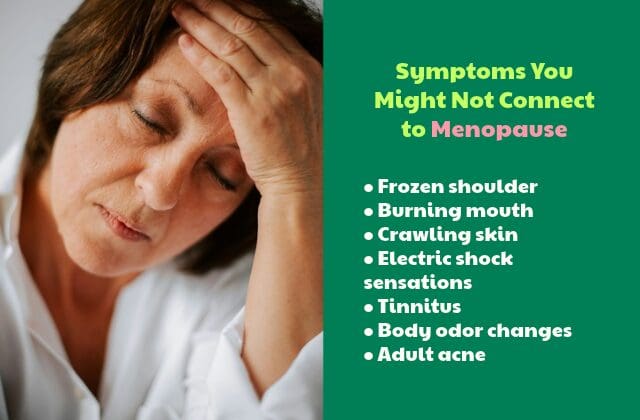
Frozen Shoulder
Pain and stiffness that slowly lock up the shoulder joint. A Duke Health study found postmenopausal women using hormone therapy had a lower risk of this condition than women who weren’t, which points to a link with estrogen.
Muscle Aches and Muscle Loss
Estrogen helps maintain muscle, so strength can slip faster after menopause. Regular movement makes a real difference.
Bone Loss
You can’t feel it, but it’s one of the most important changes. Women can lose up to 20% of their bone density in the five to seven years after menopause.
Skin, Hair, and Nails
Estrogen helps your skin hold on to moisture and collagen, and it supports healthy hair and nail growth. As levels fall, you may notice changes in the mirror that feel surprising, especially if you’ve never had skin or hair concerns before.
Acne
As estrogen falls, androgens have a relatively stronger effect, which can trigger breakouts along the jaw and chin.
Dry, Itchy Skin
Skin loses moisture and collagen, so it may feel tight, flaky, or itchy.
Crawling Skin (Formication)
A strange sensation of insects crawling on or under the skin.
Thinning Hair
Hair may shed more or grow back finer. This is different from chemotherapy hair loss, though both can happen.
Unwanted Facial Hair
Coarse hairs on the chin or upper lip, also linked to the shift in hormone balance.
Brittle Nails
Nails that split, peel, or break more easily.
Body Odor Changes
More sweating from hot flashes can change how you smell, and some women notice a different scent altogether. Research here is limited, but it’s a commonly reported change.
Mouth, Eyes, and Ears
 These symptoms rarely make it onto standard menopause lists, so many women don’t connect them to hormones at all. But estrogen helps keep the tissues in your mouth and eyes moist and healthy, and when it drops, the effects can show up in surprising places.
Burning Mouth
A scalding feeling on the tongue, lips, or gums with no visible cause. It’s more common in postmenopausal women.
Dry Mouth and Gum Problems
Less saliva can raise the risk of gum inflammation and tooth decay.
Changes in Taste
Food may taste bitter, metallic, or bland.
Dry Eyes
Gritty, irritated, or watery eyes.
Tinnitus
Ringing or buzzing in the ears. The link to menopause is less studied, but it’s reported often enough to mention to your doctor.
Dental Health
Menopause genuinely impacts dental health, with studies showing that postmenopausal women face a higher risk of periodontal (gum) disease (up to 50% higher risk), jawbone density loss (osteoporosis affecting the jaw), and dry mouth (xerostomia), which can contribute to decay and loose teeth over time.
Heart and Metabolism
Before menopause, estrogen helps protect the heart and keeps metabolism running smoothly. Once it drops, some changes are easy to notice, like a racing heartbeat, while others stay hidden until they appear on routine blood work.
Heart Palpitations
A pounding, fluttering, or skipped-beat feeling, often during a hot flash. Always get palpitations checked, and seek emergency care for chest pain or fainting.
Rising Cholesterol
Cholesterol levels often climb after menopause, even if your habits haven’t changed. It has no symptoms, so it shows up only on blood work.
Weight Gain and Body Composition Changes
Lower estrogen shifts where the body stores fat, moving more of it to the belly. After ovarian cancer, weight changes can have other causes too. See ovarian cancer weight gain.
Digestion
Hormones affect how quickly food moves through your gut, so digestive changes are common during menopause. For ovarian cancer patients and survivors, though, these symptoms deserve extra attention because some of them overlap with cancer warning signs.
Bloating
Hormone changes can slow digestion and cause gas and a swollen feeling. But persistent bloating is also a classic ovarian cancer symptom, so read the red flags section below and our guide to ovarian cancer bloating.
Constipation, Gas, and Reflux
Changes in gut movement and the gut microbiome may contribute.
Nervous System and Other Surprising Symptoms
These are less studied, and much of what we know comes from first-hand reports. They’re still worth tracking.
Electric Shock Sensations
Brief zaps under the skin, sometimes just before a hot flash.
Tingling in Hands and Feet
Pins and needles. After chemotherapy, this may be neuropathy instead, so tell your team.
Dizziness
Feeling lightheaded or off balance.
New or Worse Allergies
Some women report more reactions or sensitivities.
Restless Legs
An urge to move your legs at night that can disrupt sleep.
Symptoms Mostly Seen in Natural Menopause
These two usually show up during perimenopause, which surgical menopause skips.
Irregular Periods
Cycles become shorter, longer, heavier, or lighter before stopping. Bleeding after menopause is not normal, though. (See ovarian cancer abnormal bleeding.)
Breast Tenderness
Swinging hormone levels in perimenopause can make breasts sore or swollen.
Menopause Symptoms: When to Call Your Doctor
Several menopause symptoms look a lot like ovarian cancer symptoms and like signs of ovarian cancer recurrence.
These symptoms deserve a call to your doctor, especially if they’re new, getting worse, or happening most days:
- Bloating that doesn’t come and go
- Pelvic or abdominal pain
- Feeling full quickly or losing your appetite
- Any vaginal bleeding after menopause
- Unexplained weight loss, or a swollen belly with weight gain
- Changes in bathroom habits, like frequent urination or constipation
- Back pain or fatigue that you can’t explain
None of these automatically means cancer. But you know your body, and you deserve answers. If you’re dismissed, it’s okay to push for testing or get a second opinion. These self-advocacy tips can help you speak up.
Managing Menopause Symptoms After Ovarian Cancer
You don’t have to just tough it out. The right plan depends on your cancer type, your treatment, and which symptoms bother you most.
Can You Use Hormone Therapy?
For some survivors, yes. For others, no. It depends on your ovarian cancer subtype, your stage, and whether your tumor is hormone-sensitive, as many low-grade serous tumors are.
This is a decision to make with your gynecologic oncologist, not on your own. Our guide to can you take estrogen after ovarian cancer explains what the research says, and estrogen vs progesterone covers how each hormone fits in.
One point of confusion to clear up: menopausal hormone therapy replaces hormones. Hormone therapy for ovarian cancer does the opposite, blocking or lowering them to slow cancer growth.
Non-Hormonal Options
If hormones aren’t right for you, there are still evidence-based choices. The Menopause Society’s position statement recommends several non-hormonal treatments for hot flashes, including:
- Cognitive behavioral therapy (CBT)
- Clinical hypnosis
- Certain antidepressants (SSRIs and SNRIs)
- Gabapentin
- Fezolinetant, a newer prescription medication made specifically for hot flashes
The same statement did not recommend supplements or herbal remedies for hot flashes. That matters even more after cancer, since some supplements can interact with treatment. Read our guide to ovarian cancer alternative therapies before adding anything new.
For vaginal dryness and painful sex, non-hormonal vaginal moisturizers and lubricants are a common first step. Ask your doctor which products are safe for you.
Everyday Habits That Help
- Move your body. Strength training and walking support bones, muscles, mood, and sleep.
- Eat to support your bones and heart. Our ovarian cancer diet and menopause nutrition guides are good starting points.
- Protect your sleep. Keep a consistent bedtime, a cool, dark bedroom, and limit alcohol and late caffeine.
- Manage stress. Try these stress management techniques for cancer patients.
Get Emotional Support
Menopause after cancer can bring grief, especially if it came early or ended plans for a biological family. Talking with people who get it helps. Look into ovarian cancer support groups and our tips for protecting your mental health in survivorship.
Questions to Ask Your Care Team
Bring a list of your symptoms to your next appointment, along with these questions:
- Is my cancer type hormone-sensitive? Is menopausal hormone therapy an option for me?
- Which non-hormonal treatments would you recommend for my worst symptoms?
- Should I have a bone density scan, and when?
- How often should my cholesterol and blood pressure be checked?
- Could any of my symptoms be caused by my current treatment?
- Can you refer me to a menopause specialist, pelvic floor therapist, or counselor?
Frequently Asked Questions
How many symptoms of menopause are there?
There’s no official count, and lists vary widely. This guide covers 48 symptoms across the body, from hot flashes and brain fog to frozen shoulder and dry eyes.
What are the first signs of surgical menopause?
Hot flashes, night sweats, trouble sleeping, and mood changes are often the first to appear. After premenopausal ovary removal, symptoms can start almost immediately rather than building over years.
Are surgical menopause symptoms worse than natural menopause?
Often, yes. Research shows women who have both ovaries removed before menopause tend to have more severe and longer-lasting symptoms, including more vaginal and urinary symptoms.
How long do menopause symptoms last?
Technically, menopause is a single point in time. In natural menopause, it’s the day you reach 12 months without a period.
In surgical menopause, it’s the day both ovaries are removed. Everything after that is postmenopause, and postmenopause is permanent. Once both ovaries are removed, they can’t start producing hormones again.
That distinction can sound like a technicality, but it changes how you plan for what comes next. Menopause isn’t a short phase you wait out. It’s the start of a long-term stage of your health that needs ongoing care for your bones, heart, sexual health, and emotional well-being.
Treatment-induced menopause can be different. Chemotherapy or ovarian suppression may shut down the ovaries only temporarily, and some women, especially younger ones, find their ovaries recover months or even years later. After surgery, that can’t happen.
Symptoms usually change in intensity over time, though some can linger for years. Hot flashes often ease. Others, like vaginal dryness and bone loss, can persist or get worse without treatment. Every woman’s timeline is a little different.
Can menopause cause ‘frozen shoulder’?
It may play a role. Frozen shoulder is common in midlife women, and one study found a lower risk among women using hormone therapy, suggesting estrogen loss could be involved.
Can menopause symptoms be mistaken for ovarian cancer?
Yes. Bloating, pelvic pain, fatigue, and changes in bathroom habits can come from either. If a symptom is new, persistent, or worsening, get it checked rather than assuming it’s menopause.
You Deserve Care That Sees the Whole Picture
Menopause is more than hot flashes. For women with ovarian cancer, it can arrive overnight, stack on top of treatment side effects, and show up in places you’d never expect.
Whether your symptoms started after surgery, during chemotherapy, or on their own timeline, they’re real and they’re worth treating. Keep track of what you notice, bring it to your care team, and ask about both hormonal and non-hormonal options that fit your cancer type.
Naming what you’re feeling is the first step. The next is asking for help, and not stopping until you get it.